

Purple dragon fruit, also known as pitaya, is a vibrant tropical fruit prized for its sweet taste, striking appearance, and impressive nutritional benefits. Whether you are a grocery shopper looking for the freshest fruit, a fruit buyer selecting produce for sale, or a market vendor aiming to provide top-quality dragon fruit to customers, knowing how to identify ripeness is crucial.
Ripeness directly impacts the fruit’s flavour, texture, and nutrient content. Perfectly ripe purple dragon fruit is juicy, mildly sweet, and packed with antioxidants, vitamin C, and fibre. An unripe or overripe fruit, on the other hand, may lack flavour or have a mushy consistency. In this guide, we’ll take you through the key indicators of ripeness so you can confidently choose the best purple dragon fruit every time.
The Ripening Journey: From Flower to Fruit
Before we explore the signs of a ripe purple dragon fruit, it’s essential to understand its growth cycle.
Purple dragon fruit develops on a climbing cactus plant and starts as a stunning white or pink flower. These flowers bloom at night and are pollinated by bats, bees, or hand pollination. Once pollinated, the flower begins transforming into fruit, which typically takes around 30 to 50 days to mature.
When harvested, dragon fruit continues to ripen off the vine, though only slightly. Unlike bananas or avocados, which significantly change after picking, dragon fruit undergoes minimal ripening post-harvest. This is why choosing a ripe one at the store is essential.
Best Seasons to Find Perfectly Ripe Fruit
Purple dragon fruit is available year-round in many tropical and subtropical regions, but its peak season is summer through early fall (June to October). During this period, you are more likely to find fully ripened and naturally sweet fruits at markets.
The Eye Test: Visual Cues of a Ripe Dragon Fruit
One of the easiest ways to determine if a purple dragon fruit is ripe is by observing its colour, skin texture, and leafy protrusions (scales).

Color Check: The Magic of Magenta
A ripe purple dragon fruit boasts a deep magenta or vibrant purple hue.
- Look for a bright, saturated colour with even tones throughout the skin.
- Avoid: Fruit that is overly green, pale, or dull in colour, as these are signs of immaturity.
- Brown spots & blemishes: A few minor spots are normal, but large patches of dark brown or mould indicate overripeness or spoilage.
Scale Inspection: The Leafy Crown Tells a Story
The leafy protrusions (scales) of a dragon fruit are excellent indicators of its ripeness.
- Slightly wilted or drying scales: This means the fruit is ripe and ready to eat.
- Fresh green scales: These indicate that the fruit still needs time to ripen.
- Shrivelled and dark brown scales: This is a sign that the fruit is overripe and may not be as fresh.
By using these simple visual checks, you can confidently select the juiciest and most flavorful purple dragon fruit available.
The Touch Test: Firmness vs. Mushiness
One of the easiest ways to check if a purple dragon fruit is ripe is by performing the touch test.

- Gently squeeze the fruit: When you press the fruit lightly with your fingers, it should have a slight give, indicating it is ripe and ready to eat.
- Hard fruit = underripe: If the fruit is too firm and doesn’t yield under gentle pressure, it means it is still underripe and may take a few more days to ripen.
- Mushy fruit = overripe: If the fruit feels excessively soft or mushy, it is likely overripe and may have an undesirable texture or taste.
- Pro Tip: When shopping for purple dragon fruit, compare different fruits in the store. Feel multiple pieces to find one that has the ideal firmness—soft but not mushy.
The Scent Test: Follow Your Nose
A ripe purple dragon fruit has a distinct yet subtle fragrance that can guide you in selecting the best one.
- Mild, sweet aroma: A ripe dragon fruit will have a light, sweet scent that hints at its juicy and flavorful flesh inside.
- No smell? Probably underripe: If you don’t detect any scent, it likely means the fruit hasn’t ripened yet and may need additional time before it reaches peak flavour.
- Sour or fermented scent? Likely overripe: If the fruit gives off an overly strong or slightly sour smell, it is past its prime and may not taste as fresh.
- Pro Tip: If possible, smell multiple dragon fruits in the store to distinguish the subtle differences in aroma and ensure you select one that is perfectly ripe.
The Weight Trick: Heavier is Better
Weight can be another excellent indicator of ripeness and juiciness in purple dragon fruit.
- A ripe dragon fruit feels dense: When you pick up the fruit, it should feel heavy for its size, indicating that it is filled with juice and at peak ripeness.
- Lighter fruit may be dried out: If the fruit feels unusually light, it might be lacking moisture inside, making it less juicy and flavorful.
- Why weighing fruit in your hand is a quick and easy test: Even without a scale, you can compare different dragon fruits in the store. Select the heaviest one for its size to ensure it is ripe and full of juicy goodness.
- Pro Tip: Hold a few dragon fruits of similar size and choose the one that feels the heaviest—it is likely the ripest and most flavorful option.
Bonus Tip: Peeking Inside the Fruit
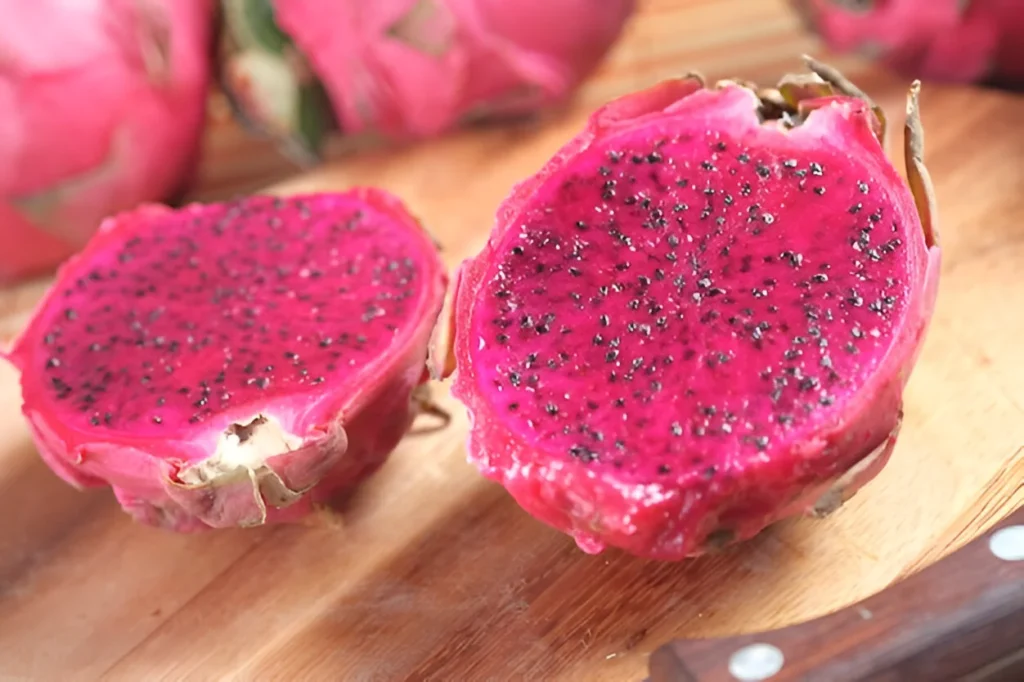
Take a look inside the fruit to confirm its ripeness before making a purchase.
- Deep purple flesh with tiny black seeds is ideal: When you cut open a ripe purple dragon fruit, the inside should have a vibrant, rich purple colour with evenly distributed small black seeds.
- White or pale flesh may mean it’s not fully mature: Sometimes, dragon fruit that appears ripe on the outside may still be slightly underripe if the interior flesh is pale rather than deep purple.
- Overripe fruit may have mushy, darkened flesh: If the flesh appears excessively soft, overly dark, or has an unpleasant odour, it may be past its prime and less enjoyable to eat.
- Pro Tip: If you’re buying pre-cut dragon fruit, inspect the colour and texture of the flesh to ensure it is fresh and ripe.
Common Mistakes Shoppers Make (And How to Avoid Them!)
When it comes to selecting ripe purple dragon fruit, many shoppers unknowingly make mistakes that lead to disappointing purchases. Here are the most common mistakes and tips on how to avoid them:

Choosing Based on Color Alone
While the colour of the skin can give some indication of ripeness, it should not be the sole factor in your decision-making process. A ripe purple dragon fruit typically has vibrant, evenly coloured skin that is free from excessive blemishes. However, not all purple dragon fruit is perfectly uniform in colour. Some variation in shades is normal, so it’s best to consider other factors, such as texture and firmness, to gauge ripeness.
Ignoring Weight – Light Fruit Means Less Juice
Weight is a critical indicator of ripeness in dragon fruit. When shopping, hold the fruit and compare its weight to others of similar size. A ripe purple dragon fruit should feel dense and heavy for its size, indicating that it is packed with juice. If the fruit feels light, it may be underripe or dried out, which can affect its flavour and texture. Always pick the heaviest one to ensure you’re getting a juicy fruit.
Buying Fruit with Excessive Brown Spots or Wrinkles
Purple dragon fruit, like any other fruit, can suffer from ageing or improper handling. Brown spots or wrinkles on the skin are common signs of over-ripeness or poor storage conditions. While a few small blemishes are normal and don’t always affect the taste, excessive spots or deep wrinkles should be avoided. Look for fruits with firm, smooth skin and no signs of over-ripeness. If you notice soft spots or wrinkles, the fruit may not be fresh.
Storing Incorrectly After Purchase
How you store your purple dragon fruit after buying it plays a significant role in maintaining its freshness. A common mistake is storing dragon fruit in a warm place, leading to premature ripening and spoilage. To extend its shelf life, store your purple dragon fruit in the refrigerator if it’s ripe or leave it at room temperature if it’s still firm and needs to ripen. Avoid storing it in direct sunlight or a hot area, as this will cause the fruit to spoil faster.
Where to Buy the Freshest Purple Dragon Fruit

Supermarkets vs. Farmers’ Markets: Which Has Fresher Produce?
When shopping for purple dragon fruit, the question of where to buy it is crucial. Supermarkets often carry dragon fruit, but the quality can vary depending on where the fruit was sourced and how long it has been on the shelf. While convenient, supermarket dragon fruit is often imported and may not be as fresh as what you would find at a local farmers’ market.
Farmers’ markets, on the other hand, tend to offer fresher produce. Since these markets often feature local growers, the dragon fruit you purchase may have been harvested within the past day or two, ensuring better flavour and texture. Additionally, you can ask vendors about the origin and ripeness of the fruit, giving you more control over your purchase.
Imported vs. Locally Grown: What’s the Difference in Taste and Quality?
Purple dragon fruit is grown in various tropical and subtropical regions around the world. Imported dragon fruit, which often comes from countries like Vietnam, Thailand, or Ecuador, can vary in quality due to long shipping times and storage conditions. While imported fruit is widely available in supermarkets, it may lose some of its natural flavour and sweetness during transportation.
Locally grown dragon fruit is often fresher and has a higher chance of being picked at peak ripeness, leading to better taste and texture. If you’re looking for the freshest, sweetest fruit, locally grown options are your best bet.
Storage Tips: How to Keep Your Dragon Fruit Fresh After Buying
After purchasing your purple dragon fruit, proper storage is essential for maintaining its freshness. Here’s how to keep your fruit fresh for longer:

- Room Temperature: If the fruit is not yet ripe, leave it at room temperature for 2–3 days. Once ripe, consume it within a couple of days or refrigerate it to prolong its freshness.
- Refrigeration: A ripe dragon fruit should be stored in the fridge, ideally in a crisper drawer, to maintain optimal humidity. This can help the fruit last up to a week.
- Avoid Freezing Whole: While dragon fruit can be frozen for smoothies, it should be cut into pieces before freezing. Freezing the whole fruit can cause its texture to become mushy once thawed.
FAQs: Your Purple Dragon Fruit Questions Answered!
Can dragon fruit ripen after being picked?
Yes, but only slightly. Dragon fruit will continue to ripen after being picked, although it won’t reach the same level of ripeness as it would have if left on the plant longer. It’s always best to buy purple dragon fruit when it is already close to ripe for the best flavour and texture.
What if my dragon fruit is underripe?
If your dragon fruit is underripe, leave it at room temperature for a couple of days. This will allow it to ripen naturally. Avoid refrigerating it before it’s ripe, as cold temperatures can halt the ripening process.
How long does a ripe dragon fruit last?
Once ripe, a dragon fruit typically lasts about 2–3 days at room temperature. If stored in the fridge, it can last up to a week. Make sure to consume it before it softens too much or develops an off taste.
Can I freeze dragon fruit?
Yes! Dragon fruit can be frozen, but it’s best to cut it into pieces before freezing. Frozen dragon fruit is perfect for making smoothies, desserts, or adding to acai bowls.
Is there a difference between store-bought and home-grown dragon fruit?
Yes, there is often a noticeable difference. Home-grown dragon fruit tends to be fresher, sweeter, and more flavorful since it can be picked at the peak of ripeness. Store-bought fruit, especially if imported, may not have the same level of freshness and sweetness.
Conclusion: Become a Dragon Fruit Expert!
Now that you know how to identify a ripe purple dragon fruit, the common mistakes to avoid, and where to buy the freshest fruit, you are well on your way to becoming an expert in choosing this delicious tropical fruit. Whether you’re shopping at your local supermarket or visiting a farmers’ market, keeping these tips in mind will help you make smarter, more informed decisions.
Remember, a ripe dragon fruit should be heavy for its size, free of excessive blemishes, and stored correctly after purchase. With practice, you’ll be able to confidently choose the best purple dragon fruit every time, ensuring that your next smoothie, salad, or fruit platter is as tasty as it is beautiful. Happy shopping, and enjoy the exotic taste of fresh purple dragon fruit!
